The Complete Dental Practice Growth Handbook
Patient acquisition, front-desk SOPs, recall automation, referral systems, AI workflows, and the compliance lines that matter — everything a practice owner needs to build a predictable new-patient system in 2026.
Rohan Alexander · 34 min read · Updated July 2026
Quick Answer
Industry Overview & Economics
A dental practice is a capacity-constrained service business: revenue is bounded by chair-hours, not by demand. That single fact should shape almost every marketing decision. Unlike a retailer, a practice cannot simply sell more of the same unit when demand rises — it has to either raise prices, extend hours, add a hygienist or associate, or improve case acceptance per patient. Marketing that generates leads faster than the practice can seat them just produces frustrated no-shows and bad reviews.
| Metric | Typical range (single location, general practice) |
|---|---|
| Average patient lifetime value (5-7 years) | $3,000 - $9,000 depending on procedure mix |
| Target cost per new patient | $100 - $250 for general/preventive; $250-$600 for implant/ortho leads |
| Chair utilization at healthy capacity | 80-90% of available operatory hours |
| New patients needed per operatory per month | 15-25 to sustain steady growth after attrition |
The economics change meaningfully by service line. Preventive and routine care runs on volume and low consideration; implants, ortho, and full-mouth reconstruction run on a small number of high-value cases that require trust-building over weeks. A practice growth plan should size marketing spend against chair capacity, not against a marketing budget benchmark pulled from another industry.
The Zephra Lead Quality Matrix™ for Dental Practices
Not every new-patient inquiry is worth the same to a practice. Zephra's Lead Quality Matrix scores incoming leads on two axes — urgency (how soon they need care) and value (procedure type and likely lifetime value) — so front-desk staff and ad spend both prioritize correctly:
| Low value (checkup/cleaning) | High value (implants/cosmetic/ortho) | |
|---|---|---|
| High urgency | Fast-book, low ad spend needed (pain drives search) | Priority phone follow-up within the hour |
| Low urgency | Nurture via recall reminders | Longer consideration — needs case studies, financing info, and reviews |
Most practices treat every lead identically, which means high-value, low-urgency leads — the ones most likely to need a second touch before booking — get the least attention, not the most. Front-desk scripts should route calls into one of these four quadrants within the first 30 seconds of a call.
Why Dental Marketing Is Different
Dental care sits in an unusual spot: routine visits are low-consideration and search-driven ("dentist near me"), while cosmetic, implant, and orthodontic work is high-consideration, higher-cost, and trust-dependent — closer to how a person shops for a car than a haircut. A practice that markets both categories identically usually underperforms on both: routine-care ads need speed and convenience messaging, while cosmetic ads need proof, before/after evidence, and financing clarity.
It's also a trust-scarce category. Patients are choosing someone to put hands in their mouth, often while anxious, and that changes what "conversion" means — a five-star review carries more weight here than in almost any other local vertical, and a single unanswered call during a pain-driven search is very rarely recovered.
Marketing Maturity Model
Use this to place your practice honestly before deciding what to build next — jumping to advanced tactics without the foundation underneath rarely holds up.
| Stage | What's in place | Next investment |
|---|---|---|
| 1. Reactive | Word of mouth only, no tracked digital presence, GBP unclaimed or incomplete | Claim and complete Google Business Profile; install call tracking |
| 2. Foundational | GBP complete, basic website, occasional reviews | Launch split urgent/routine Search campaigns with matched landing pages |
| 3. Systematic | Paid search running, review requests automated, referral offer exists | Add recall/reminder automation and CRM-based follow-up sequences |
| 4. Optimized | Multi-channel acquisition, retention system, known cost per new patient | Layer in cosmetic/implant-specific campaigns and AI-assisted intake |
| 5. Scaling | Predictable CAC, capacity near-full, considering expansion | Multi-location playbook, associate-level marketing, referral network to specialists |
Core Channels, Compared
| Channel | Best for | Notes |
|---|---|---|
| Google Search / Local Services Ads | Urgent and routine-care patients actively searching | Local Services Ads show a "Google Screened" badge, which meaningfully raises trust for healthcare searches |
| Google Business Profile | Trust-building once found, "near me" map-pack visibility | Free — and often the deciding factor between two similarly-ranked practices |
| Meta (Facebook/Instagram) | Cosmetic/implant awareness, before-after storytelling | Stronger for higher-consideration procedures than routine care |
| Referral program | Highest lifetime-value, lowest cost-per-patient | Requires a deliberate system — rarely happens by accident at scale |
| Email/SMS recall reminders | Retention of the existing patient base | Often the highest-ROI channel practices most neglect |
| Organic/local SEO content | Long-term compounding visibility for specific procedures | Slow to build, but reduces long-run cost per patient once ranking |
Google Business Profile and Reviews
For most practices, Google Business Profile is the single highest-leverage free asset available. It determines map-pack visibility, and its review count and rating are frequently the deciding factor when a patient is choosing between two similarly-ranked practices nearby.
Minimum viable GBP setup:
☐ Verified listing with correct category (dentist, cosmetic dentist, pediatric dentist as applicable)
☐ Complete hours, including holiday hours kept current
☐ 10+ real photos of the office, team, and (where permitted) case results
☐ Services list matching what's actually offered
☐ Booking link or call tracking number in the profile
☐ A standing process for responding to every review within 48 hours
Review volume matters, but review recency matters nearly as much — a practice with 200 reviews but nothing in the last six months reads as either closed or declining to a patient scanning the profile.
Step-by-Step Launch Guide
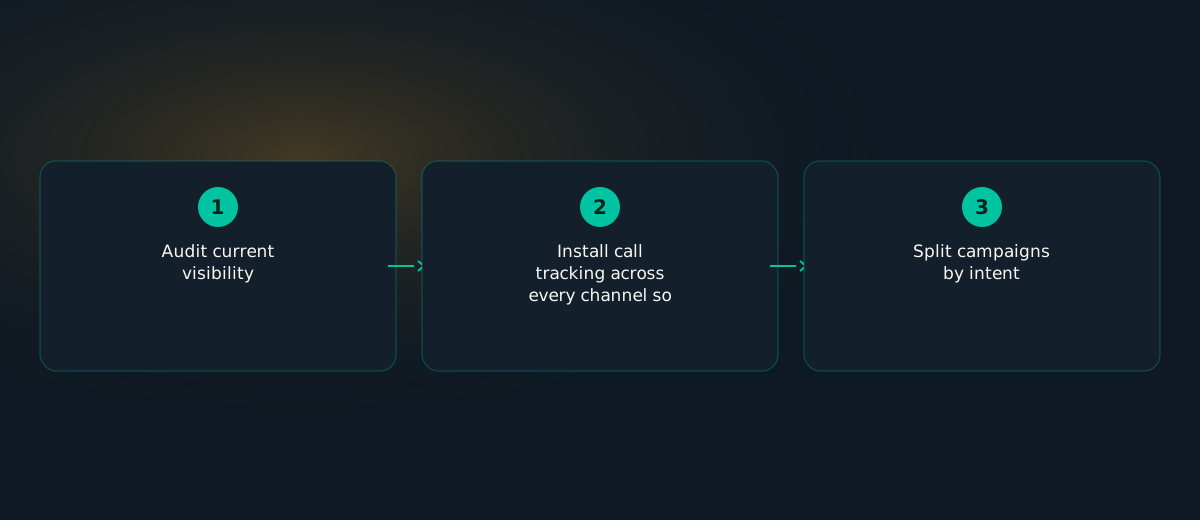
- Audit current visibility. Search your own practice name and top procedure terms from a fresh browser to see what a new patient actually sees.
- Complete Google Business Profile fully before spending a dollar on ads — paid traffic sent to an incomplete profile converts worse.
- Install call tracking across every channel so cost-per-patient can actually be measured by source.
- Split campaigns by intent — urgent/pain-driven searches and routine/preventive searches should never share an ad group or landing page.
- Automate review requests at checkout rather than relying on staff memory.
- Define one referral offer and put it in front of every satisfied patient, not just the ones who ask.
- Layer in recall/reminder sequences for the existing patient base — this is usually the fastest path to measurable revenue.
Budgets and Growth Roadmap
| Practice stage | Monthly ad budget | Focus |
|---|---|---|
| New/single chair | $1,500 - $3,000 | Google Search + Local Services Ads, GBP build-out |
| Established single location | $3,000 - $6,000 | Add Meta for cosmetic/implant awareness, retention automation |
| Multi-location or high-value specialty | $6,000 - $15,000+ | Per-location campaigns, associate-level marketing, referral network |
A useful rule of thumb: budget should scale with open chair capacity, not with ambition. A practice already running near-full should redirect incremental budget toward case-acceptance rate and referral systems rather than more top-of-funnel leads it can't seat.
Adjusting Budgets for Your Market
The figures above are illustrative starting points from a US-style market. Ad costs, wages, and competitive intensity vary enough by country that the same practice stage can need a very different local budget — treat these as a rough starting multiplier, then calibrate against actual local CPCs rather than converting currency 1:1.
| Market | Rough starting budget (new/single chair) | Notes |
|---|---|---|
| US / Western Europe | $1,500–$3,000/mo | Figures used elsewhere in this handbook |
| India | ₹25,000–₹60,000/mo | Typically a fraction of US-equivalent CPCs, though metro-market and cosmetic/implant competition can close the gap |
| UAE / GCC | AED 5,500–11,000/mo | Often comparable to or above US CPCs, especially for cosmetic and implant-focused practices in a high-value, internationally competitive market |
Zephra's free audit calibrates budget recommendations against live local CPC data for your specific market rather than a fixed benchmark.
Building a Referral System
Referred patients typically convert faster, accept treatment plans more readily, and churn less — but almost no referral volume happens without a deliberate ask. A working system needs three parts: a simple, specific offer (not "refer a friend" but a stated benefit for both parties), a moment to ask (checkout, after a positive review, post-treatment follow-up), and a way to track who referred whom so the loop can be closed and thanked.
Front-Desk Operations & SOPs
Marketing that works but a front desk that drops the ball is the most common way practices waste ad spend. These SOPs close that gap:
Call handling SOP
1. Answer within 3 rings; if missed, callback within 5 minutes during business hours.
2. Identify urgency/value quadrant (Lead Quality Matrix above) within the first 30 seconds.
3. Offer same-day or next-day slot for urgent calls before discussing anything else.
4. Confirm insurance/payment method before end of call to reduce no-shows.
5. Log source (ad, referral, walk-in) in the CRM for every call, every time.
New-patient intake SOP
1. Send confirmation + intake forms digitally within 10 minutes of booking.
2. Reminder SMS/email 48 hours and 2 hours before appointment.
3. Front desk briefed on procedure type and any financing questions likely to arise.
4. Post-visit: same-day review request if experience was positive; note for recall calendar.
CRM Workflow & Follow-Up Sequences
A CRM (even a simple one) should track every lead through the funnel below. The most commonly missing step is stage 4 — most practices book or lose a lead and never follow up on the ones in between.
| Stage | Action | Timing |
|---|---|---|
| 1. New inquiry | Logged with source, urgency/value tag | Immediately |
| 2. Contacted | Call or message attempted | Within 5 minutes for digital leads |
| 3. Booked | Confirmation + intake sent | Immediately after booking |
| 4. Interested but not booked | Follow-up sequence (2 SMS + 1 call over 10 days) | Day 1, day 3, day 10 |
| 5. Treated | Review request + recall scheduling | Same day / at 6-month interval |
| 6. Lapsed | Reactivation campaign | At 9-12 months since last visit |
Mapping the Patient Journey
Awareness (search or referral) → trust check (GBP, reviews, website) → contact (call or form) → booking → first visit → treatment plan/case acceptance → recall/retention → referral. Most practices only actively manage the middle three steps and leave the first and last two to chance — which is exactly where this handbook's operations and CRM sections above are meant to close the gap.
Insurance, Payment Plans, and Conversion
Unclear insurance and financing information is one of the most common silent conversion killers, especially for higher-value treatment plans. Landing pages and front-desk scripts should state accepted insurance plans clearly, offer at least one financing option for treatment over a defined threshold, and give a realistic out-of-pocket range before the patient arrives — surprise costs at the chair are a leading cause of treatment-plan abandonment.
Advertising Compliance and Patient Trust
Healthcare advertising is one of the more actively regulated categories. Before-and-after photography, testimonials, and specific outcome claims typically require informed patient consent and accurate, non-misleading representation — but exact rules vary by country and professional dental council, so confirm current requirements locally before publishing any campaign that uses patient imagery or claims.
Practice-Type Variations
| Practice type | Marketing emphasis |
|---|---|
| General/family practice | Local search volume, GBP, recall retention |
| Cosmetic dentistry | Meta/Instagram before-after content, financing clarity, longer nurture sequence |
| Pediatric dentistry | Parent-facing trust signals, school/community partnerships, reviews mentioning child comfort |
| Orthodontics | Longer consideration window, payment plan messaging, teen/parent dual audience |
| Implant-focused | High-value, low-volume leads; case studies and specialist credibility matter most |
AI Implementation Roadmap
| Phase | Use case |
|---|---|
| Phase 1 | AI-drafted ad copy variations and review-response drafts for staff to approve |
| Phase 2 | AI-assisted call summarization and CRM logging so no lead detail is lost |
| Phase 3 | AI-driven recall/reactivation messaging personalized by procedure history |
| Phase 4 | AI receptionist for after-hours and overflow calls, routed by urgency/value quadrant |
The common thread: AI should remove drafting and logging work from front-desk staff, not replace the judgment calls around urgent-care triage or treatment discussion, which still belong to trained humans.
KPIs, Benchmarks & Dashboards
| Metric | Why it matters | Healthy benchmark |
|---|---|---|
| Cost per new patient | Core unit economics of the acquisition engine | $100-$250 general; $250-$600 high-value |
| Call answer rate | Directly caps how much of your ad spend converts | 95%+ |
| Booking-to-show rate | Measures confirmation/reminder effectiveness | 85%+ |
| Review request → review rate | Indicates whether the ask is actually happening | 20-30% |
| Recall reactivation rate | Retention health of the existing base | 60%+ of due patients rebooked within 60 days |
A simple monthly dashboard tracking these five numbers by channel gives an owner more decision-useful information than most marketing reports twice its length.
Case Study
A two-chair general practice split its Search campaigns into urgent and routine ad groups, completed its Google Business Profile, and automated review requests at checkout. Within 90 days, cost per new patient fell as click-to-call quality improved, and review volume roughly tripled — most of the gain came from removing friction (better call handling, faster review asks) rather than from spending more.
Decision Matrix
| Situation | Priority |
|---|---|
| New practice, few reviews | Google Business Profile + review system first, ads second |
| Established practice, stable patient base | Referral system + recall reminders for retention economics |
| Adding a cosmetic/implant service line | Meta awareness campaign with compliant before-after content |
| High patient churn to competitors | Investigate Google Business Profile trust signals and wait-time complaints first |
| Near-full chair capacity | Shift budget from acquisition to case-acceptance and referral systems |
Common Mistakes
- Running one blended campaign for both emergency and routine care, diluting relevance for both.
- Treating Google Business Profile as a one-time setup instead of an ongoing review and content habit.
- No referral system beyond a passive mention on the website.
- Publishing before-after content without confirming current local advertising and consent rules.
- No recall/reminder system, leaving retention entirely to chance.
- Generating more leads than chair capacity can seat, damaging both no-show rates and reviews.
- No consistent call-source logging, making true cost-per-patient impossible to know.
Troubleshooting
High call volume, low booking rate: check front-desk call handling and hold times before touching ad spend — a strong campaign can still lose patients at the phone.
Reviews aren't growing despite good care: the ask likely isn't happening consistently — automate a request at checkout rather than relying on staff to remember.
Cosmetic campaign generating clicks but no consultations booked: check whether financing options and pricing expectations are clear enough on the landing page — high-consideration procedures stall without this.
Cost per new patient rising over time: check for ad fatigue in creative, competitor entry in the local market, or a drop in Google Business Profile review recency.
Launch Checklist
☐ Google Business Profile claimed and fully completed
☐ Call tracking installed across all channels
☐ Separate urgent-care and routine-care ad groups with matched landing pages
☐ Automated review-request system live at checkout
☐ One clear, simple referral offer defined and communicated
☐ Before-after/testimonial content checked against current local compliance rules
☐ CRM follow-up sequence live for "interested but not booked" leads
☐ Recall/reminder sequence live for existing patients
AI Prompts to Speed This Up
- "Write 3 Google Search ad variations for a general dentist targeting 'emergency dentist near me' vs 'new patient cleaning' — keep tone reassuring, not alarming."
- "Draft a checkout-triggered SMS review request template for a dental practice, friendly and under 200 characters."
- "Write a 3-message follow-up SMS sequence for a patient who inquired but hasn't booked, spaced over 10 days, without sounding pushy."
- "Draft a recall reminder email for patients due for a 6-month cleaning, with a simple one-click rebooking link."
30/60/90-Day Plan
| Period | Focus |
|---|---|
| Days 1-30 | Complete Google Business Profile, install call tracking, confirm compliance rules, launch split urgent/routine Search campaigns. |
| Days 31-60 | Turn on automated review requests and CRM follow-up sequences; define and launch a referral offer. |
| Days 61-90 | Review cost per new patient by channel, add recall/reminder automation, evaluate a cosmetic/implant campaign if capacity allows. |
FAQ
What's the best marketing channel for a dental practice?
Google Search and Local Services Ads together, paired with a strong Google Business Profile and review base — many patients check both before booking.
How much should a dental practice spend on marketing?
Most single-location practices start around $1,500-$3,000/month combined across channels, scaling once cost per new patient is known.
Can dental practices legally advertise before-and-after photos and testimonials?
Generally yes with informed consent and accurate representation, but rules vary by country — confirm with your local dental council before publishing.
How long does dental practice marketing take to show results?
Paid search can book appointments within 1-2 weeks; Google Business Profile and reviews typically take 2-3 months; referrals usually take a full quarter to compound.
Should a new practice focus on general dentistry or a specialty first?
Usually general/preventive care first for reliable volume, then layer in higher-value cosmetic or implant campaigns once there's a patient base and reviews.
How many new patients should a single-chair dentist expect per month?
Typically 15-30 monthly once campaigns are optimized on a $2,000-$3,000 budget, varying by local competition and procedure mix.
Is a dental answering service or AI receptionist worth it?
For practices losing after-hours or overflow calls, yes — a missed call during a pain-driven search is rarely recovered since the patient calls the next practice on the list.
You can build a dental patient-acquisition system manually using the steps above.
Zephra sets up split urgent/routine campaigns, matched landing pages, review-request automation, and recall sequences from a single practice brief, then optimizes cost per new patient across Google and Meta together.
Start Free Audit →Sources & Further Reading
- WordStream — 2026 Google Ads Benchmarks Report — Current cross-industry CPC, CTR, conversion rate, and cost-per-lead benchmarks.
- Google Ads Help — How our bidding algorithms learn — Google's guidance on how its bidding algorithms learn from account data.
Figures and platform mechanics referenced in this guide are cross-checked against the above as of publication; ad platform thresholds and benchmarks change over time, so confirm current figures directly with the source before making budget decisions.